
Building a climbing wall can be a rewarding DIY project for any climbing enthusiast. You must consider at least six things before building a climbing wall that can make or break your experience before you grab a drill and start sketching out designs. Getting the details right from the start ensures you spend your time, money, and energy well, whether you’re planning a compact bouldering setup in the basement or a full outdoor structure in the backyard. Let’s touch on every matter you need to take into account, from materials and space planning to safety and route setting.
1. Planning and Design
Every great climbing wall starts with a solid design. Begin by measuring your available space to make sure it can support the kind of wall you have in mind. A vertical setup needs at least eight to ten feet of height, while steeper walls may require 12 feet or more.
Decide early whether the wall will attach to an existing structure, such as a garage wall, or stand on its own. Attached walls tend to be more cost-effective and space-saving, while freestanding walls offer greater freedom in layout and customization. Either way, it’s important to plan for structural stability. A well-built frame, reinforced joints, and solid anchoring are essential.
A single overhang is the most practical choice for home use when it comes to wall angles. A 20 to 30-degree incline works well for power moves and bouldering without making the wall too technical to build. Clean angles also make route setting easier and lets you get more out of your climbing space.
2. Budget and Timeline
Like any good home project, a climbing wall needs a realistic budget. Lumber, hardware, rock climbing wall holds, safety mats, tools, and finishing materials can add up quickly. Weatherproofing supplies are a must if you’re building outdoors. It’s also smart to build in a cushion for surprise expenses, such as additional hardware or last-minute fixes.
Time is another factor that deserves serious attention. Even though building might only take a few weekends, the entire process—from design and material sourcing to route setting—often stretches over a month or more. Allow room in your schedule for delays or setbacks. Cutting corners or rushing the build could compromise safety and lead to long-term frustrations.

3. Materials and Construction
Durability starts with choosing the right materials. Outdoor walls need pressure-treated wood or sealed untreated lumber to handle moisture and resist decay. Standard plywood works well for indoor builds as long as it’s thick enough—usually ¾-inch sheathing—to support repeated climbing forces and hardware stress.
Hardware choices matter just as much. Corrosion-resistant screws and bolts are essential, especially if the wall is exposed to the elements. Use screw-in varieties when installing T-nuts. They’re more secure than the hammer-in kind, which is known for loosening or damaging the plywood over time.
Sturdy framing, reliable fasteners, and solid sheet material all work together to create a wall that won’t wobble under pressure. Taking the time to construct it correctly the first time ensures it’ll hold up to years of use.
4. Climbing Holds and Route Setting
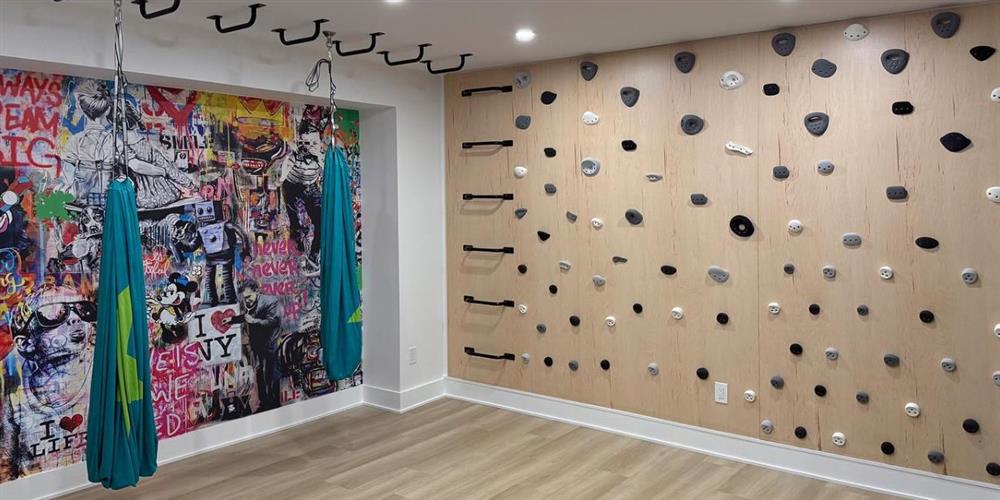
The holds are where the fun really begins. They shape your climbing experience and bring variety to your wall. Atomik Climbing Holds Inc. is a trusted go-to for raw, high-quality, USA-made holds in all shapes and sizes—from beginner-friendly jugs to technical crimps and pinches. We even offer glow-in-the-dark holds to keep the fun going after the sun goes down!
Hold density makes a big difference, especially for new climbers. One hold per square foot is a solid starting point, giving you plenty of options without overcrowding. You can adjust your layout or swap in more challenging holds to fine-tune your routes as your skills grow.
Simplicity in wall angles also pays off during route setting. Fewer angle changes give you more freedom in how you place holds, which allows for smoother, more natural movement. Big, flat overhangs are great for power-focused training, while gentler slopes lend themselves to endurance and technique development.
5. Safety and Fall Protection
Safety should always be a top priority. That starts with proper padding beneath the wall—whether you’re using modular crash pads or gym-style mats. Avoid relying on second-hand items like old mattresses unless they’re paired with proper padding, as these can compress unevenly and increase injury risk. A good rule is one inch of padding for every foot of wall height. So, aim for at least ten inches of cushion to effectively absorb falls if your wall stands ten feet tall.
Pad more than just the base. Add foam or protective barriers around those areas if your wall is near furniture, beams, or other hard surfaces. It’s all about minimizing risk during uncontrolled falls or unexpected swings.
Space also matters. Even in a compact room, try to leave at least six to eight feet of clear, padded area around the wall to provide room for movement and landing. Small walls in tight areas can still be safe with the right prep and thoughtful setup.
6. Know Your Limits
Even if you’re handy, it helps to know where to ask for support. A climbing wall isn’t your typical DIY project—it combines carpentry, engineering, and safety design in one build. Don’t hesitate to call in help from someone with more experience, whether it’s a construction-savvy friend or a pro installer.
Many companies that manufacture climbing holds, including Atomik Climbing Holds Inc., also offer helpful guidance for home wall builders. Tutorials, templates, and advice from people who’ve done it before can keep you from making avoidable mistakes.
Make Your Climbing Wall Dream a Reality
Building a home climbing wall takes effort, but it pays off in every session. You can create a personal climbing space that rivals the gym with a thoughtful plan, quality materials, and the right safety steps. These six things to know before building a climbing wall will guide you through the process and keep your project on track.
Check out Atomik Climbing Holds Inc.’s dependable, high-quality options made right here in the U.S. when you’re ready to start decking your wall out with holds. We craft our holds for all levels of climbers, offering the perfect mix of texture, durability, and variety. We’ve got the grips to bring your routes to life, whether you’re training hard or just having fun.


Leave your comment