If you want to get stronger, move better, and avoid plateaus, understanding how to mix climbing wall holds for cross-training can reshape the way you train. A smart blend of shapes, sizes, textures, and wall angles forces your body to adapt instead of settling into autopilot. Instead of building strength in just one grip, you develop balanced skills that carry over to steep terrain, long sessions, and outdoor rock. The right combination of rock climbing wall holds turns a basic wall into a complete training tool.
Balance Grip Categories
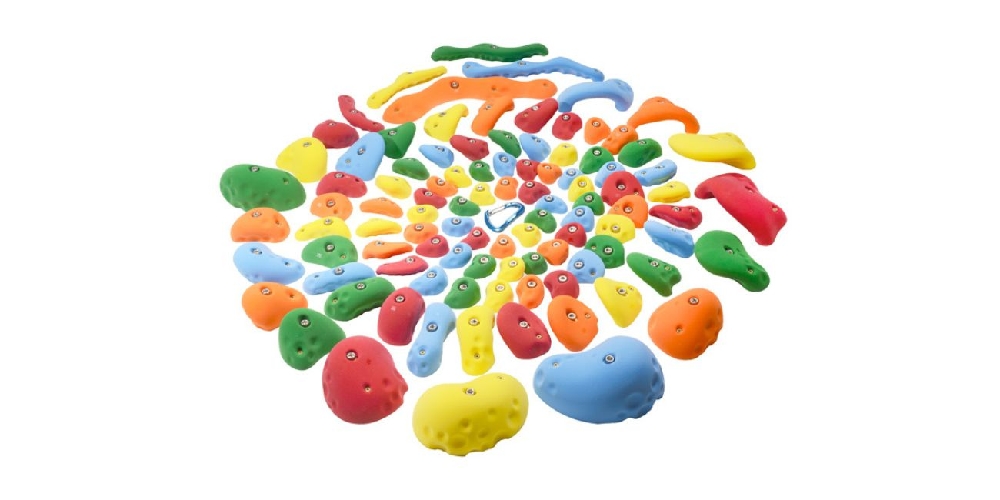
Cross-training begins with variety in your primary grip types. Climbing demands more than locking off on big jugs; it requires control across multiple hand positions and movement styles. When your wall leans too heavily toward one grip, your progress eventually levels out.
Build your hold selection around core categories that challenge different muscles and techniques by using:
- Jugs for warmups, recovery sections, and dynamic movement
- Crimps for finger strength and precise hand placement
- Slopers for open-hand strength and body tension
- Pinches for thumb engagement and squeeze power
- Pockets for finger independence and accuracy
Each category emphasizes different muscle recruitment. Crimps load the finger flexors intensely, slopers emphasize open-hand control and shoulder stability, and pinches activate thumb opposition strength that many climbers neglect. By rotating these demands throughout a session, you prevent one system from dominating your training.
A balanced spread keeps your sessions productive and more sustainable. You’ll train your hands evenly instead of overworking the same grip pattern week after week.
Layer Hold Sizes
Grip variety is not just about shape. Size dramatically changes how demanding a hold feels, even within the same category. A large incut crimp builds confidence, while a smaller edge forces careful positioning and controlled movement.
Within each grip type, include multiple size tiers. Rotate between large and mini-jugs, medium and small edges, and more positive versus more neutral pinches. This approach lets you increase intensity gradually without redesigning your wall.
Layering sizes also makes progression smoother. You can keep the same movement style while dialing difficulty up or down based on hold depth and surface area. For example, replacing two positive holds in a sequence with slightly smaller versions can instantly raise the difficulty while preserving the overall flow.
Change Wall Angles
Holds feel completely different depending on the wall angle. A sloper on vertical terrain might feel approachable, but that same sloper on a 20-degree overhang demands serious core tension and body awareness.
If your setup includes slab, vertical, and overhung sections, you automatically expand your training range. Use slab for foot precision and balance, vertical panels for clean sequencing, and steep sections for power and tension.
Even a small 10- to 15-degree shift changes the challenge. Adjusting the angle while keeping hold types consistent is one of the simplest ways to increase cross-training value.
For smaller home walls, angle variation does not require a full commercial build. A single adjustable panel or a short overhung section added above a vertical base can dramatically expand training potential. Even rotating holds to change their orientation on the same panel can simulate new movement patterns when space is limited.
Combine Bolt-On and Screw-On Holds
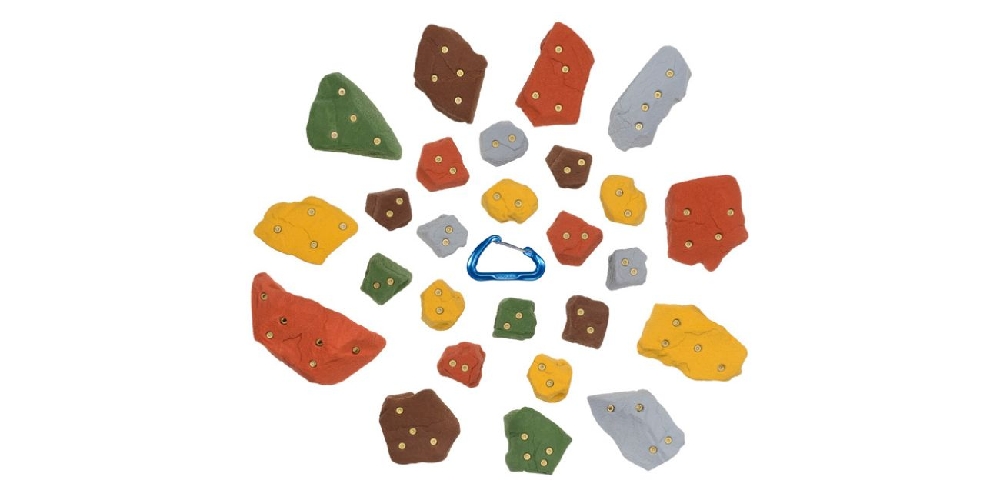
Bolt-on holds attach using machine bolts into T-nuts, making them ideal for larger shapes and primary hand placements. Screw-on holds secure directly to the panel with wood screws and are often used for footholds or fine-tuned route setting details.
Blending both styles gives you more control over movement. Use bolt-ons to define the main sequence, then add screw-ons to create footwork puzzles or subtle body-position adjustments.
Screw-ons are especially valuable for cross-training because they allow micro-adjustments. A small foothold placed slightly higher or lower can completely change body positioning and muscle demand without altering the primary hand sequence.
For home wall builders, plan a dense T-nut grid spaced about six to eight inches apart. As a starting point, aim for 15 to 25 holds per 4x8-foot panel to support variety without overcrowding the wall.
Vary Hold Textures
Texture plays a quiet but important role in cross-training. Smoother finishes require precise body positioning and steady tension, while more textured surfaces offer extra confidence on steep terrain.
Durable polyurethane holds with multiple texture options allow you to fine-tune friction without sacrificing longevity. Texture options designed to feel like clean sandstone create subtle differences that keep your grip strategy evolving.
Rotating textures across routes keeps your hands adapting and improves tactile awareness. That variability helps you stay comfortable when outdoor conditions change, where rock texture rarely stays consistent from route to route.
Design Multi-System Circuits
Cross-training becomes more effective when you combine grip types within a single route. Instead of isolating crimps or slopers, build sequences that shift demands from move to move.
For example:
- Start on positive jugs to warm up dynamically.
- Transition to medium crimps for controlled pulling.
- Finish on slopers that require core tension and steady footwork.
This kind of structure trains power, endurance, and coordination in one continuous effort. It feels closer to real climbing, where grip styles rarely stay consistent for long.
You can also reverse the order to emphasize different systems. Starting on tension-heavy slopers and finishing on positive holds builds mental control under fatigue and encourages efficient movement when tired.
Adjust Hold Density
Hold density directly affects how your wall trains you. Closely spaced holds encourage longer movement chains and endurance. Wider spacing increases power demands and forces bigger, more dynamic moves.
If endurance is your goal, increase the number of usable hand and footholds. If power is your focus, reduce density and create intentional gaps between positive grips.
As your training cycle shifts, adjust the density to match it. For example, during a strength-focused phase, limit intermediate holds to force harder pulls. During endurance blocks, add additional footholds and hand options to extend time on the wall.
Build Progression Into Your Setup
Cross-training only works when progression is deliberate. Begin with more positive, confidence-building grips and gradually incorporate smaller edges, steeper angles, and more demanding shapes.
Reposition holds regularly to introduce new movement puzzles. Rotating placements prevents repetitive strain and keeps your body adapting.
It can also help to think in phases. Spend several weeks emphasizing tension and slopers, then shift toward crimp strength and precision. Later, adjust your wall for more dynamic movement and wider spacing. Cycling your focus areas keeps your training balanced across the year.
Learning how to mix climbing wall holds for cross-training means thinking of your wall as something that evolves with you. That mindset keeps sessions purposeful and growth steady.
Train Smarter With the Right Mix
A thoughtfully mixed wall builds the complete climber. By blending grip categories, sizes, textures, angles, and density, you train strength, tension, coordination, and creativity in every session. Over time, that balanced approach supports steady improvement without burning out one system.
Ready to build a wall that grows with you? Atomik Climbing Holds delivers durable polyurethane holds in various colors and textures, shipped to you within 1–5 business days. Every hold is backed by a lifetime warranty, so your wall can evolve as long as you do.