
When you first build a home climbing wall, your goal is to simply get climbing. But as your skills develop, that original setup might start to feel too easy or uninspiring. Progression in climbing doesn’t just come from pulling harder, but from introducing new challenges that push technique, strength, and problem-solving.
The good news is that you don’t need a total overhaul to evolve your space. From swapping out holds to adjusting wall angles or surfaces, here’s how to start upgrading your climbing wall as your skills improve.
Add Volume and Variety
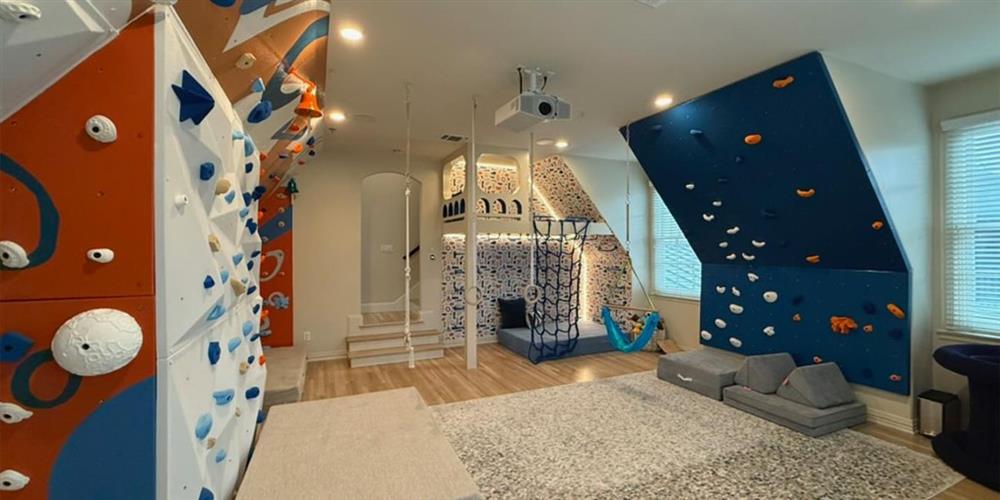
Adding overhangs, volumes, or slight angles introduces new movement patterns that engage different muscle groups. You don’t need a full cave setup; just shifting one panel to a 15- to 30-degree overhang can dramatically increase difficulty without requiring a massive space.
Volumes are a smart way to design new challenges without permanently altering your wall. Bolt-on volumes come in all shapes and sizes, allowing you to increase surface area, create awkward body positions, or force dynamic moves. Try placing a volume just off the center line of the wall to break symmetry and challenge route reading.
If you’re short on room, consider movable panels or kicker boards at the base. These small additions alter your footwork and create compression-style problems with minimal cost or effort. The goal here is to make each climb more three-dimensional, requiring pushing, pulling, and twisting in new ways.
Dial in Route Setting
As your wall evolves, so should your approach to setting problems. Instead of randomly scattering holds, start thinking in sequences. Draft routes that require movement planning, body tension, or footwork precision. One way to do this is to use colored tape or coordinated hold colors to define a specific path with an intended flow.
You can increase difficulty without changing the wall’s structure by adjusting hold orientation, spacing, and grip type. For example, a jug can feel completely different when rotated sideways or placed at shoulder height rather than chest level.
When designing intermediate routes, place holds 18–24 inches apart and mix in directional holds, such as side pulls or underclings, that require you to move with intention.
Consider limiting the number of footholds as well. Try setting a route with only two footholds to start, then climb it with silent feet. This improves precision and control—two major components of climbing at higher levels.
If you climb with partners, take turns setting and giving feedback to keep the problems fresh and creative.
Incorporate More Challenging Holds
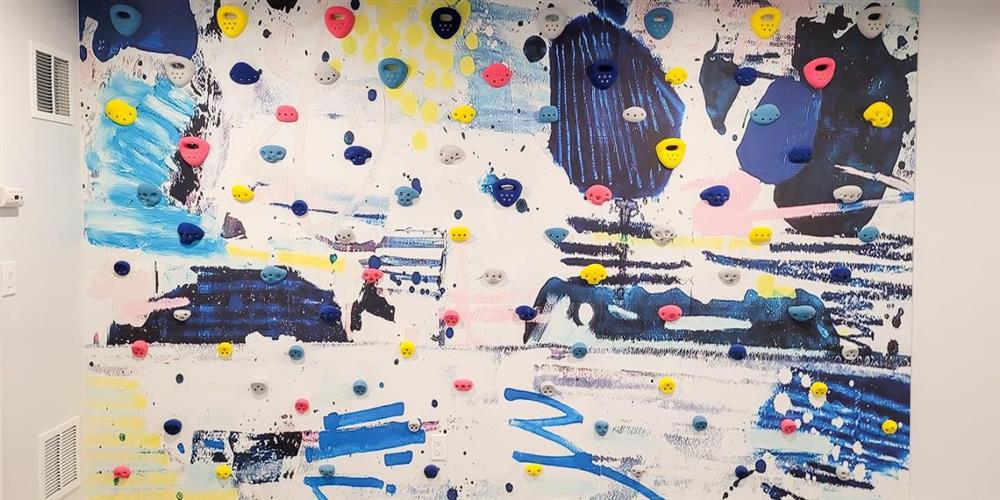
The moment basic holds stop pushing your limits, level up your wall with a wider variety of grip types. Introducing smaller or more technical holds like crimps, slopers, pinches, and pockets forces you to engage different muscles and refine your technique. The best way to start is by incorporating a few challenging holds into familiar routes, then gradually building new problems around them.
Look for rock climbing holds for sale that are rated for specific grip types and difficulty levels to build onto your collection. Investing in quality holds ensures you get consistent texture and durability, especially when working on limit moves.
Don’t just buy the smallest or most advanced holds. Diversity is key. A mix of moderate and difficult holds allows you to scale problems up or down depending on your session goals.
Spacing becomes more critical with advanced holds. You’ll want to keep them closer together vertically (10–14 inches) to prevent overreaching while maintaining the desired difficulty.
Pay attention to ergonomics. Poorly placed crimps or pockets can lead to strain or injury if used too often without variation or proper warm-up.
Use Texture and Surfaces
Upgrading your wall doesn’t always mean adding new features; it can also mean changing how your wall feels. Wall surface texture, hold material, and the finish on your panels all influence how much grip, friction, and precision your movements require. Smooth finishes make larger holds feel more technical, while coarse textures add confidence for smearing or sloping footwork.
Consider mixing materials or applying texture paint or anti-slip coating to certain areas of your wall. Inserting a few fiberglass or wooden holds into your plastic hold rotation forces subtle adjustments in hand pressure and foot placement. This encourages better technique and builds awareness of how grip varies across real rock types.
You can also repurpose existing volumes or plywood scraps to build features like slabs, cracks, or arêtes. These unique additions provide physical challenge and mental stimulation, especially when paired with route-setting, that takes advantage of their specific angles and friction.
Experiment With Footwork Constraints
If you’ve focused mostly on upper-body strength, now’s the time to sharpen your footwork. One of the easiest and most cost-effective upgrades you can make is adding intentional footwork challenges. Try setting routes with designated footholds only or using colored tape to mark allowed placements. Focused climbing sharpens balance, efficiency, and body awareness.
You can also limit handholds and concentrate on footwork drills. Set a route where hands stay on a jug rail while your feet do all the work navigating smaller, varied footholds. And if you want to level up the difficulty, affix slick holds or tape off large footholds entirely to encourage toe precision and quiet stepping.
Footwork upgrades are particularly useful when wall space is limited. Even a small wall can support high-quality, technique-heavy sessions when you shift focus away from pure strength and toward movement efficiency.
Build for Long-Term Progress
A good home wall should evolve with you. Keep tweaking your setup with modular elements—holds, volumes, or panels you can rotate or reconfigure. Doing so prevents boredom and allows you to revisit past movements with new strength or insight. Route-setting isn’t just a necessity; it’s a creative part of your growth as a climber.
Think about establishing a routine for resetting part of your wall every month or season. That might mean adding new holds, rotating volumes, or simply flipping the angle on an adjustable panel. Small shifts refresh your motivation and expose new areas for improvement.
Keep Evolving Your Setup
The more you climb, the more your wall should reflect your growth, not just in terms of difficulty, but also in creativity, variety, and purpose. Whether you’re fine-tuning a single panel or transforming your entire home setup, upgrading your climbing wall as your skills improve is about staying challenged and inspired. Every new hold or adjustment opens the door to new techniques, new projects, and a better understanding of your climbing style.
One last consideration: support matters. If you’re going to invest in quality upgrades, work with companies that share your values. Atomik Climbing Holds is an employee-run manufacturer based in the United States, utilizing American-sourced materials to craft climbing holds that are durable, innovative, and safe. Made with a polyurethane resin that’s completely inert and non-toxic, our products are built with both performance and community in mind.
So, wherever your wall takes you next, make sure it’s built to grow with you and backed by people who share the same passion for climbing as you do.


Leave your comment