
A bouldering wall loses its appeal quickly when every climb feels the same. The same grips and the same sequences can turn even a solid setup into something you stop thinking about. When you start adding a variety of holds to your bouldering wall, you quickly realize how much each shape changes the experience.
The right mix keeps sessions interesting and helps climbers build real, usable skills. Whether you're setting up a home wall or refreshing a gym space, variety is what keeps you coming back for another round.
Why Does Hold Variety Matter for Every Climber?
A wall filled with one type of hold might work at first. Big, positive grips make climbing approachable, especially during warmups or for newer climbers. After a while, though, the movement starts to repeat itself.
Climbing gets better when the holds force you to adjust. Some shapes demand body tension, while others require careful positioning. That shift keeps your mind engaged instead of letting you cruise through familiar patterns.
Variety also supports long-term progress. When your wall challenges different grip styles, you build a more complete skill set. Instead of getting comfortable in one lane, you develop movement that transfers to anything you climb.
Why Do Different Hold Shapes Change Movement?
Each hold type changes how your body solves a problem. A jug lets you pull confidently, which opens the door for bigger movement or relaxed pacing. A sloper removes that certainty and forces you to stay connected through positioning.
Crimps tighten the margin for error and bring finger control into focus. Pinches pull your thumbs into the equation and change how your hands engage. Even small differences in shape can completely shift how a sequence feels.
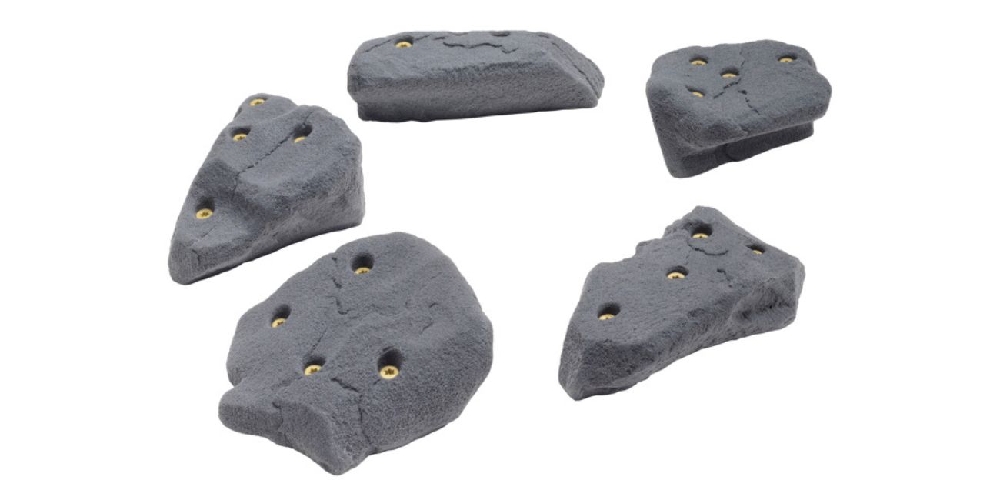
That’s where bouldering wall holds stop being background details. They actively shape how climbers move and respond. More grip variety means more ways to build technique without needing a larger wall.
Why Should Beginners Train on More Than Jugs?
Jugs are essential for getting started. They build confidence and allow climbers to focus on footwork without worrying about slipping off every move. That early comfort makes a big difference.
Still, mixing in a few other hold types early on helps build better habits. It encourages awareness of body position instead of relying only on pulling strength.
A beginner-friendly wall can include:
- Large jugs for easy movement and warmups
- Mini-jugs for added control
- Simple slopers for body awareness
- Comfortable pinches for grip variety
This approach keeps climbing approachable while gradually introducing new challenges. It sets up steady progress instead of a sharp jump in difficulty later.

Why Do Experienced Climbers Need Grip Diversity?
Experienced climbers notice right away when a wall feels limited. If every climb uses similar grips, training becomes narrow. You might get stronger, but only in one specific style.
A broader mix of holds keeps things balanced. Smaller edges test precision, while rounded shapes demand better tension. Switching between grip types forces you to stay adaptable.
Variety also makes it easier to target weak spots. If a certain hold type gives you trouble, adding more of it to your wall gives you a direct way to improve. Over time, those weaknesses become part of your strength.
Why Does Variety Keep Home Walls Feeling Fresh?
Home walls have to do a lot with limited space. Without variety, they can start to feel repetitive, even if the build itself is solid. That’s where thoughtful hold selection comes in.
A dense T-nut grid gives you flexibility. T-nuts are threaded inserts in the wall panels that allow you to move bolt-on holds without drilling new holes. That simple detail lets you reset routes as often as you want.
Hold density matters too. A starting point of 15 to 25 holds per 4x8-foot panel gives enough options without overcrowding the wall. From there, you can adjust based on how you like to climb.
When you think about why bouldering walls need more variety in holds, it really comes down to longevity. Swapping holds and changing layouts keeps a small wall feeling new.
Why Do Commercial Walls Require Broader Hold Selections?
Commercial walls serve a wider range of climbers with different goals. A single hold style won’t work for everyone, especially in a busy gym. Variety gives setters the tools to create routes for multiple skill levels.
It also keeps resets from feeling repetitive. With more shapes available, each new route can feel distinct instead of slightly adjusted versions of the same idea.
A broader mix supports better route diversity and keeps climbers engaged over time. It also allows gyms to create different styles across the same wall, which adds depth to the experience.
Why Does Texture Add Another Layer of Variety?
Shape gets most of the attention, but texture changes how a hold feels just as much. A smoother surface requires more precision, while a more textured hold can feel more secure.
That difference affects how climbers approach each move. Two holds with similar shapes can climb very differently depending on surface feel and placement.
Why Does Variety Improve Route Setting?
Route setting is about creating movement, not just placing holds. When the selection is limited, every climb starts to feel familiar. That makes it harder to keep things interesting.
With more variety, setters can build routes around a clear idea. One climb might focus on balance, while another leans into power or coordination. That range keeps climbers engaged and willing to try again.
Even on a home wall, small changes go a long way. Rotating a hold or swapping shapes can turn a familiar sequence into something new without much effort.
How Does Hold Variety Support Long-Term Progression?
Progress in climbing comes from consistent challenges. When your wall offers a range of hold types, it naturally pushes you to adapt. Each session works a different part of your movement and strength.
A wall without variety tends to plateau. You get comfortable, and progress slows down. Adding new shapes keeps things moving forward.
Over time, this builds a more complete climber. You gain confidence across different styles and develop the ability to adjust quickly. That’s what keeps climbing interesting year after year.
Build a Wall That Keeps You Coming Back
A great bouldering wall should evolve with you. It should challenge your movement, highlight your weaknesses, and give you new problems to solve every session. Hold variety is what makes that possible.
If you're ready to upgrade your setup, Atomik Climbing Holds can help! We offer durable polyurethane holds with a lifetime warranty, custom color options, and fast shipping. Build your perfect wall with holds that keep every climb fresh.



Leave your comment