How to Paint a Climbing Wall
How to Paint a Climbing Wall
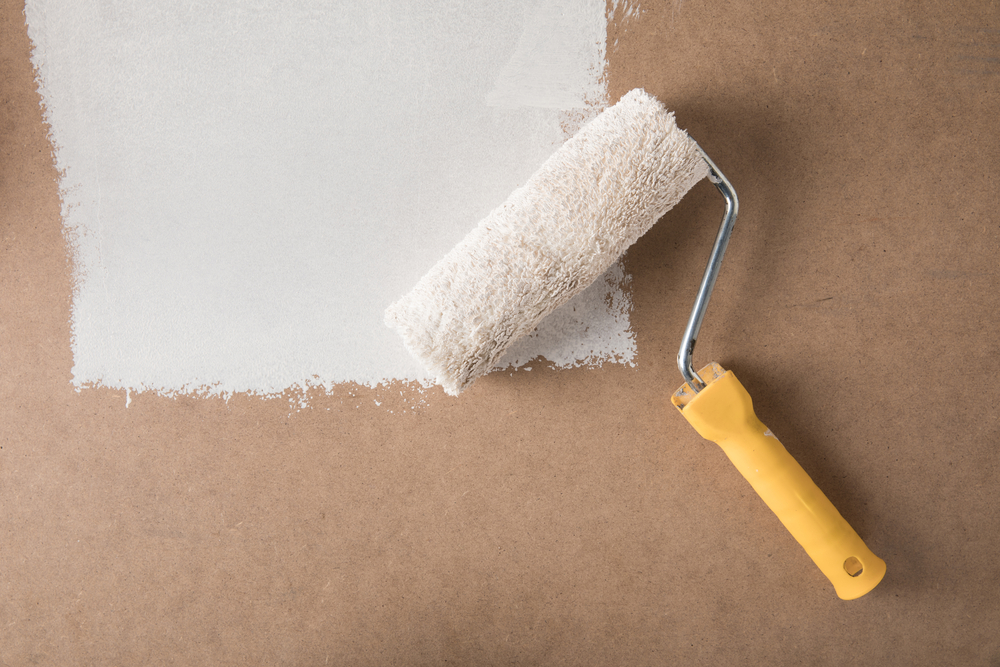
There are two main categories into which climbing wall panels fit. There are the commercial panels you see in commercial climbing gyms, and then there are the DIY panels. This How-To is meant for the DIY'er.
Commercial climbing wall panels are painted with expensive epoxy paints. It cures very hard, and many vendors coat each panel up to six times. You get the best results when you do multiple thin layers. Buying panels from most of these vendors typically yields a very durable product. They are a challenge to purchase due to their lengthy turnaround time and are quite expensive for a home climbing wall. The following is the most durable and cost-effective method for painting a climbing wall panel.
To Texture or Not to Texture?
It is recommended to texture paint your panels if possible. The main reason is that it discourages a climbing hold from spinning. You can also try finding paint that offers texture, which will do the work for you. Floor paint is the best option, as it is formulated to withstand foot traffic or, in our case, the pressure of climbing shoes. A flat or satin sheen is the best choice for wall paint.
We do not recommend using sand for texture. As soon as sand is mixed into your paint, it settles to the bottom of the tray and is difficult to get an even texture. The best additives are made from lightweight products, such as crushed walnut shells or glass microspheres. Here you can find Anti-Skid Floor Additives.
Now let's dive into the painting. But wait! You might have the question, "Do I drill out my T-nuts before this?" The answer is no. You will want a smooth flat surface to paint, as well as the T-nuts to be free of anything, especially paint.
Step #1: Prime
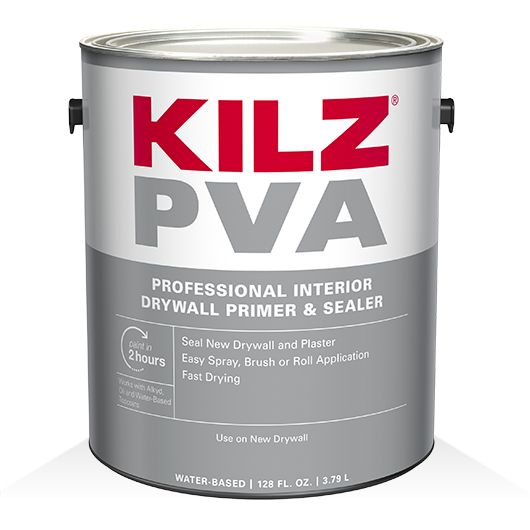
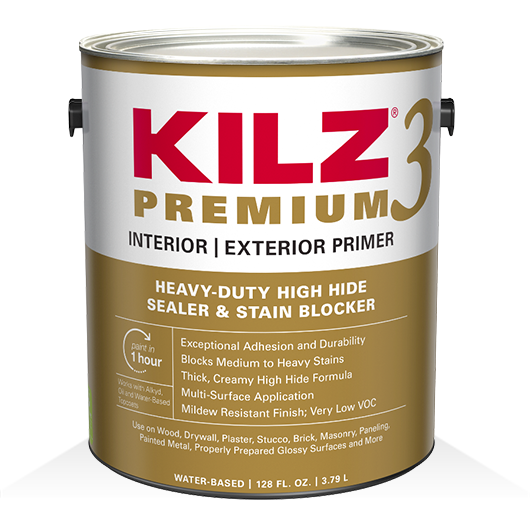
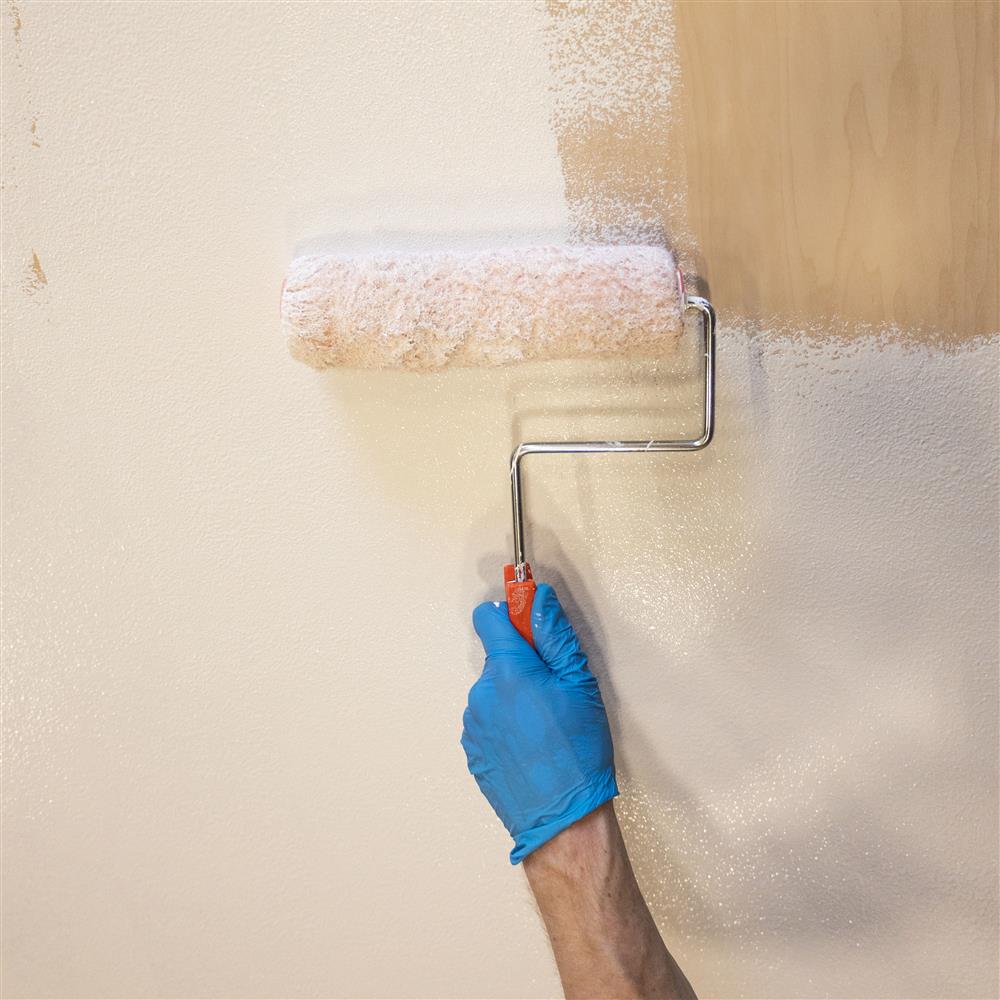
While the paint is intended to deliver color, the primer's primary function is to best prepare the surface for painting. Priming helps solve a wide range of problems including a very porous surface (like new plywood), stains, unwanted odors, uneven surfaces, texture differences, and adhesion problems (paint having difficulty sticking to the surface.)
If not properly sealed, porous surfaces like plywood can soak up a lot of paint, costing you valuable time, money, and paint.
Optional Step: Paint with Texture (100% Acrylic)
Wall texture is water-based paint with some inert material added to it. Sand, rubber, and microbeads (also known as dicaperl) are among the materials used. The heavier the material, the quicker it will settle in your paint tray. One option commonly found in most hardware stores is called Shark Grip. Sand is the heaviest and settles within minutes, and Shark Grip is the lightest, which stays mixed reasonably well in the paint tray. There will be exceptions to this, and many other products on the market are also worthy of consideration. If you opt for floor paint, consider using a product called Floortex. All of these products are designed for use on tennis courts or as anti-skid paint. When rolling out these paints, it is helpful to have a painting helper who spreads out the grit with a 4-inch brush in various directions. You will see roller marks on the panel if you don't do this.
Here you can find Anti-Skid Floor Additives.
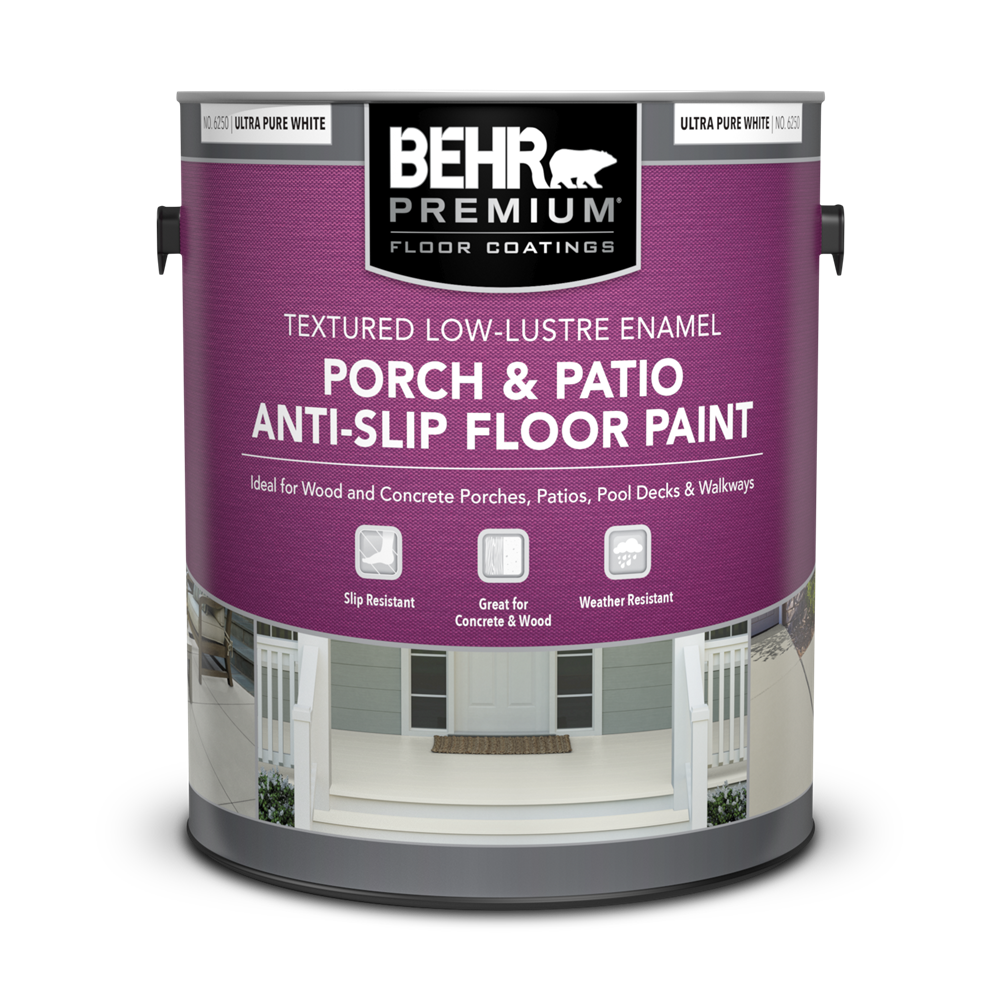
Step #2: Paint
Once your panel is clean, prepped, and primed, apply the Porch & Patio Floor Paint. Stir the paint before applying. Apply a thin, even coat using a 3/8" nap roller, nylon-polyester brush, or airless sprayer.
TIP: The spread rate will vary depending on the porosity and texture of the surface. Use the appropriate spread rate per gallon and apply when air and surface temperatures are between 50°F and 90°F.
Do not thin paint if using a roller and brush.
TIP: If you are using more than one can, you can ensure color uniformity by intermixing all cans.
Step #3: Let Each Coat Dry
Let the coating dry. The layer will dry to the touch in 1 hour; however, allow at least 4-6 hours before applying your second and third coats. Professionally painted climbing wall panels are sprayed with up to six coats to achieve a uniform texture.
TIP: Certain colors may require more than one coat to achieve complete coverage.
Step #4: Allow Time to Cure
Ensure the surface cures completely before use. Allow 72 hours for everyday use.
TIP: Premature heavy traffic can cause paint failure, requiring spot re-coating.
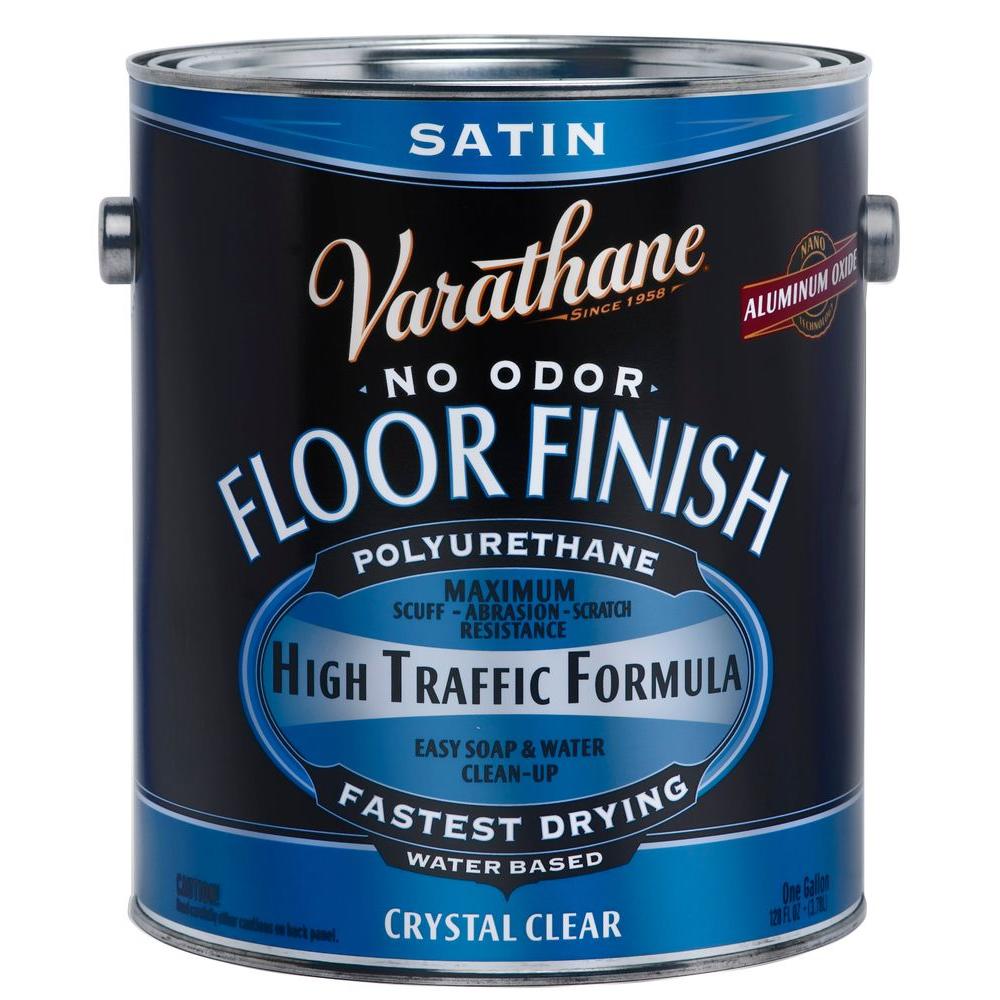
Step #5: Seal with Satin Varathane Floor Finish Water-Based
Almost every paint that is used for climbing walls will remain tacky for days or even weeks. The Epoxy paint that many commercial gyms and panels use is the exception. That's bad because the pressure of the climbing hold against the wall can cause the holds to stick to the wall. To avoid this problem, use Varathane Clear Satin Water-Based Floor Polyurethane High Traffic Formula.
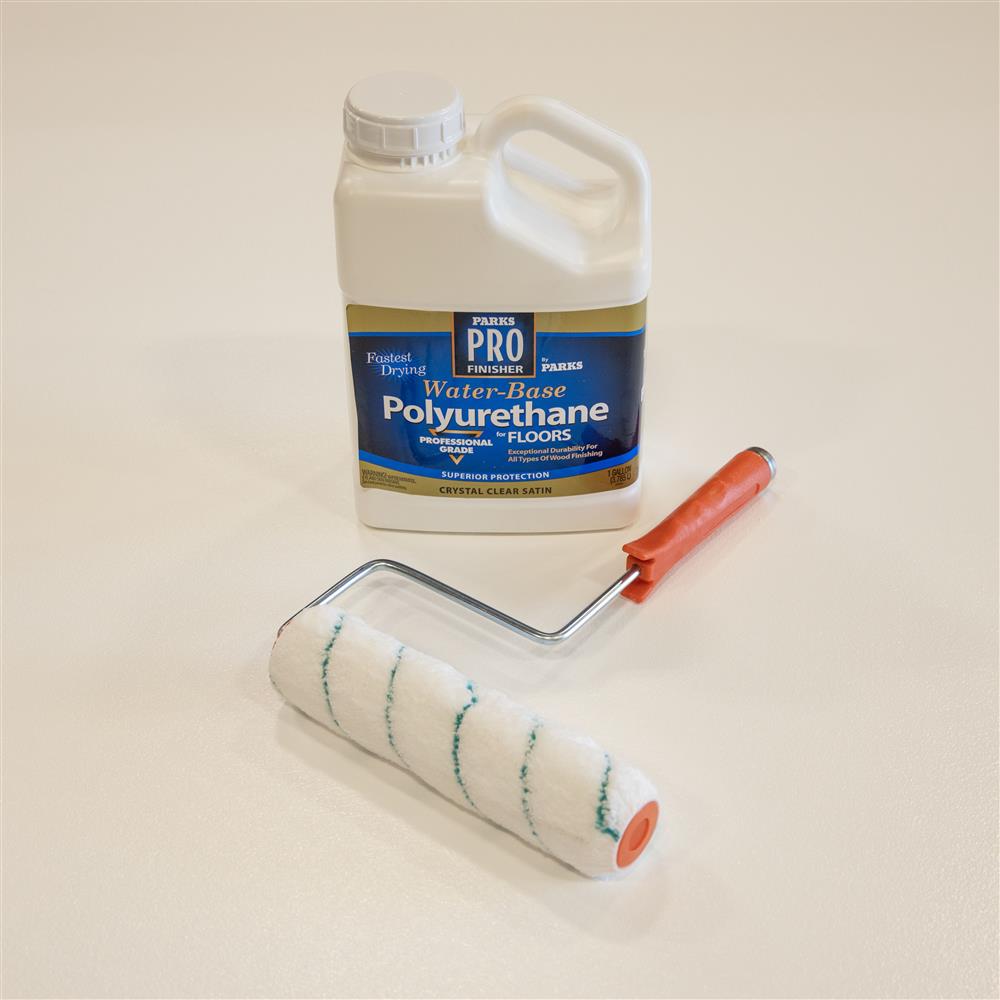
Stir thoroughly before and during use. Apply evenly. To prevent bubbles in the finish, DO NOT SHAKE. Apply using a good-quality, synthetic bristle brush or a low-nap roller. Allow the finish to dry for a minimum of 2 hours and then recoat. Varathane recommends a minimum of 3 coats of water-based polyurethane as it coats in thinner but harder layers than an oil-based poly. Water-based polyurethane dries very quickly, allowing up to four coats to be applied in a single day.
Expert Tips For Outdoor Climbing Wall Panels:
Wood absorbs water. So, on any outdoor climbing wall, keeping rain and snow off it is best. The best option is to build a roof over the climbing wall. Although it may be a little more expensive, in the long run, it will help protect the holds.
These tips are for the exposed panel.
1. Prime the front, back, and sides of the panel. Painting all sides helps too.
2. Once you have painted all the panels and sealed them with a floor finish, it's time to drill out the T-nuts. Once all your T-nut holes are drilled, take the time to seal them with the floor finish. We roll out the floor finish sealer and then use a small brush to seal the holes.
Next up is drilling holes for T-Nuts, click here for a complete guide.
Click here for our printable T-Nut layouts.

55 East 600 South, Provo, Utah 84606
Tel. 801-404-0280
[email protected]